|
Leh - Ladakh is the largest
province within the North Indian State of Jammu and Kashmir,
covering approximately 60,000 square miles (100,000 sq. km).
It is surrounded and bisected by some of the highest mountain
ranges in the world. Running in a generally northwest to
southeast direction through Ladakh, the great Himalayan Range
separates the Vale of Kashmir from Ladakh. We have various
Tour Packages for your ready reference, though we believe on
Tailor Made Itineraries for your scheduled trip to Ladakh and
kashmir.
It is located to the north of the Indus River at an elevation
of 3600m above the sea level. The town is dominated by the
Namgyal Tsemo (victory peak) built by King Tashi Namgyal in
16th century, as a royal residence and the nine-storey Namgyal
Palace built by King Sengge Namgyal on his victory in
reunification of the Upper and Lower Ladakh in 17 century. Leh
became the capital of Stod (upper Ladakh) during the reign of
King Graspa Bum- Lde, who ruled Ladakh from 1400 to 1430 AD.
In the later period, Leh became an important center for trade
in Central Asia, along the Indus Valley between Tibet to the
east, Kashmir to the west and ultimately between India and
China
Major Sightseeing in Leh
 Shanti
Stupa Shanti
Stupa
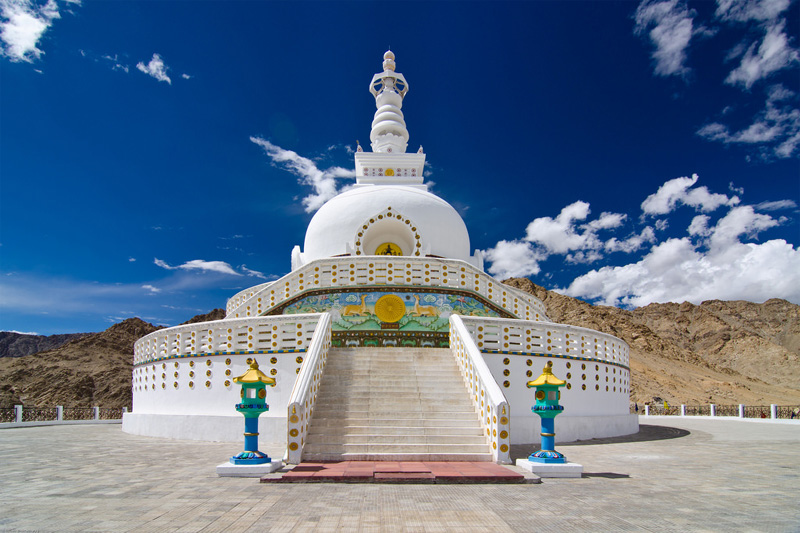
The Shanti Stupa is white-colored domed-shaped structure,
located in Chandspa which looks extremely beautiful during
night when it is illuminated. This peace pillar was built a
'peace sect' of Japanese Buddhist organization to celebrate
the completion of 2500 years of Buddhism and for the promotion
of world peace. It was inaugurated by His Holiness, the Dalai
Lama in 1985. This pillar is known for its gilt panels
depicting the life stories of Lord Buddha. It is just 5 kms
away from the main city of Leh and is surrounded the
traditionally built houses of the locals and snow-covered
mountains. Take the steep slights to reach the Stupa that
offers beautiful sunrise and sunset views.
Leh Palace
Leh Palace known as the 'Lhachen Palkhar' is a former royal
palace of the Leh Kingdom. Located in Leh city. It is one of
the biggest tourist attraction of Leh city. The 17th century
Palace, Leh Palace is also one of the tallest buildings of its
time with nine story's. The palace provides spectacular views
of Stok Kangri and the Ladakh mountain range as well as town
and surroundings
Sangam
 SANGAM
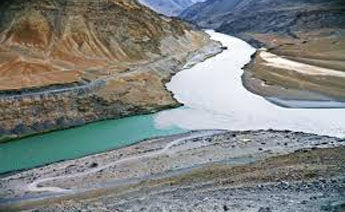
- (Confluence of river Zanskar and Indus point) is located at
6KM from Nimo valley towards the Leh city on Kargil Leh
highway. If you are travelling to Leh from Manali, you will
have to visit this place from Leh city at the distance of just
35KM SANGAM
- (Confluence of river Zanskar and Indus point) is located at
6KM from Nimo valley towards the Leh city on Kargil Leh
highway. If you are travelling to Leh from Manali, you will
have to visit this place from Leh city at the distance of just
35KM
IF you are goging to Leh to Kargil then stop at this spot
which is famously known as Confluence of Indus & Zanskar
Rivers. There is special points are developed by the authority
so that you can have a beautiful view of this confluence from
the height.
Zanskar river is shiny blue in colour, on the other hand Indus
looks a little green. In the Winter Season - Zanskar freezes
completely during some part of the winter to enable the Chadar
trek, the Indus keeps flowing though it too would have started
to freeze in patches. Summer or winter, this confluence makes
for a great sight.
Hall of Fame
Hall of Fame is a museum constructed by the Indian Army in
memory of the brave Indian soldiers who laid down their lives
defending the motherland in the Indo-Pak wars. The Hall of
Fame museum is located on the Leh-Kargil Road, about 4km from
the city of Leh. It stands as a reminder of the great
sacrifices made by our soldiers to ensure the safety and
security of our country.
Magnetic Hill
Magnetic Hill lies on the Leh-Kargil-Baltic National
Highway in the Trans-Himalayan region. To the east of the
Magnetic Hill flows the Sindhu River, making the surroundings
a photographer's delight.
Lamayuru Monastery
 Lamayuru
Monastery is a Tibetan Buddhist Monastery perched at an
altitude of 11520 ft., the monastery is one of the fascinating
places to visit in Ladakh. The oldest gompa is also one of the
largest monasteries in Ladakh famed as Tharpa Ling which means
the 'place of freedom'. Nearly 150 monks belong to the
monastery and 30-40 still reside at the gompa belonging to the
Red-Sect of Buddhism. The monastery lures spirituality
learners and tourists who wish to spend some time at a
beautiful location amidst the sacred aura. The gompa also
serves as the meditation center. Tranquil ambiance and scenic
location of the monastery is mesmerizing. Lamayuru
Monastery is a Tibetan Buddhist Monastery perched at an
altitude of 11520 ft., the monastery is one of the fascinating
places to visit in Ladakh. The oldest gompa is also one of the
largest monasteries in Ladakh famed as Tharpa Ling which means
the 'place of freedom'. Nearly 150 monks belong to the
monastery and 30-40 still reside at the gompa belonging to the
Red-Sect of Buddhism. The monastery lures spirituality
learners and tourists who wish to spend some time at a
beautiful location amidst the sacred aura. The gompa also
serves as the meditation center. Tranquil ambiance and scenic
location of the monastery is mesmerizing.
Lamayuru is the oldest and one of the largest monasteries in
Ladakh. As per legends, Lamayuru's valley was a clear lake at
the time of the Sakyamuni. The lake was the dwelling place of
the holy serpents. The Bodhisattva Madhyantaka made a
prediction that the lake will be emptied and a monastery will
be built here. Naropa, a Buddhist scholar visited Ladakh in
11th century and spent many years meditating in a cave. Naropa
then caused a split in the surrounding hillside and due to
this the lake emptied. Thereafter, Naropa found a dead lion
covered by the waters of the lake. Naropa built the first
temple on this spot and named it as the Singhe Ghang (Lion
Mound).
Alchi monastery
Alchi monastery, located in the Alchi village in Leh, was
built by the great translator Guru Rinchen Zangpo between 958
and 1055. Today it is being monitored by Likir Monastery. This
monastery is actually a complex of temples consisting of 4
separate portions that has monuments built at different times.
The main complex has three temples- gTsug-lag-Khang (main
temple), 'Jam-dpal lHa-Khang (Manjushri temple) and Dukhang
(assembly hall).
Alchi monastery is one of the most well-known ones. The walls
of the site are adorned with paintings depicting the details
of Hinu kings as well as the teaching of Buddhism.
Hemis Monastery
 Hemis
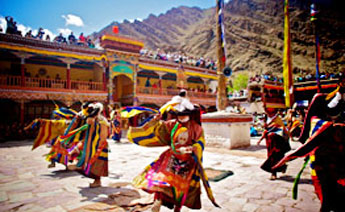
Monastery is a Tibetan monastery belonging to the Drukpa
Lineage. Counted as one of the iconic monasteries in Ladakh,
Hemis is perched on a mountain along the west bank of Indus
River. People eagerly await to marvel at the numerous
paintings or Thangkas that are carefully preserved here and
are displayed on the famous Hemis Festival. A visit to the
Hemis Monastery is one of the highlights of planning holidays
in Ladakh. Hemis
Monastery is a Tibetan monastery belonging to the Drukpa
Lineage. Counted as one of the iconic monasteries in Ladakh,
Hemis is perched on a mountain along the west bank of Indus
River. People eagerly await to marvel at the numerous
paintings or Thangkas that are carefully preserved here and
are displayed on the famous Hemis Festival. A visit to the
Hemis Monastery is one of the highlights of planning holidays
in Ladakh.
The ancient Hemis monastery is said to be have existed before
the 11th century. Naropa, the teacher of the translator Marpa
and the pupil of the yogi Tilopa, are regarded as the founding
fathers of the Kagyu-lineage of Buddhism, with, Hemis is its
main seat. The first incarnation of Stagsang Raspa Nawang
Gyatso founded the monastery in 1630 when he was invited to
Ladakh by the King Singay Namgyal.
Matho Monastery
Matho Monastery is a Tibetan Buddhist monastery built under
the Saskya Monastic Establishment. It was constructed around
500 years ago. It was established by Lama Dugpa Dorje in 1410,
who belongs to Sakya order. It houses a marvelous collection
of ancient Thangas and known for its Matho Nagrang Festival.
It is an annual festival which takes place in the first half
of March. It is a nice place where you can understand Buddhist
teachings and philosophies. The nearby attraction of this
place is Stakna Gompa.
Rangdum Gompa
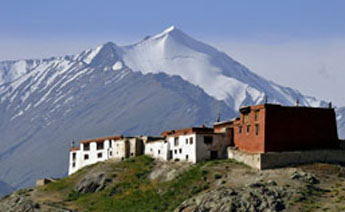 Rangdum
Gompa is situated halfway between Kargil and Padum. It was
founded by Losang Geleg Yeshe Drogpa in the 18th century. It
rises above a centrally ascending mountain, established around
the diverged route of a mountain stream. It appears like an
ancient fortification, which stands as a guardian of a
mystical mountain valley. It is located alongside Julidok
village and around 25 kilometers from the Pensi La pass which
leads to Zanskar. This monastery is home to around 30 monks
and monasteries. Rangdum
Gompa is situated halfway between Kargil and Padum. It was
founded by Losang Geleg Yeshe Drogpa in the 18th century. It
rises above a centrally ascending mountain, established around
the diverged route of a mountain stream. It appears like an
ancient fortification, which stands as a guardian of a
mystical mountain valley. It is located alongside Julidok
village and around 25 kilometers from the Pensi La pass which
leads to Zanskar. This monastery is home to around 30 monks
and monasteries.
Rizong Gompa
Rizong Gompa, also known as Rhizong monastery belongs to
Gelugpa or Yellow Hat sect of Buddhism is situated on the
hilltop of a rocky valley to the north of river Indus. It is
also known as the Yuma Changchubling in Ladakh region.
Established at Ri-rdzong in 1831 by Lama Tsultim Nima under
the Gelukpa order, today it has around 40 monks who have to
abide by very strict rules and regulations. It is also famous
as 'the Paradise For Meditation'.
Sankar Gompa
Sankar Gompa, or monastery, is yet another beautiful
monastery in Ladakh located at a distance of around 3km from
the main town of Leh. You should visit this monastery during
your tour to Ladakh, not just for its incredible architecture
but also because it's a treasure-trove of history and art.
Sankar Monastery is believed to be a subsidiary of Spituk
Monastery, with the same Lama presiding over it.
Diskit Monastery
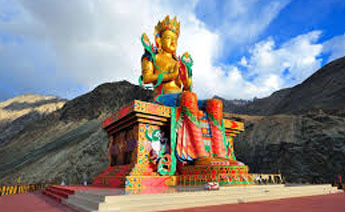 Diskit
Monastery, also known as Deskit monastery is not only the
oldest but also the largest Buddhist Gompa in the Nubra
Valley, Ladakh. The prayer hall of the monastery consists of a
statue of Maitreya Buddha, various images of other guardian
gods as well as huge drum. This monastery is of the Gelugpa
sect (Yellow Hat) of Tibetan Buddhism, founded by Changzem
Tserab Zangpo, a disciple of Tsong Khapa, founder of Gelugpa,
during the 14th century. The monastery's cupola is same as the
Tashilhunpo Monastery of Tibet. Diskit
Monastery, also known as Deskit monastery is not only the
oldest but also the largest Buddhist Gompa in the Nubra
Valley, Ladakh. The prayer hall of the monastery consists of a
statue of Maitreya Buddha, various images of other guardian
gods as well as huge drum. This monastery is of the Gelugpa
sect (Yellow Hat) of Tibetan Buddhism, founded by Changzem
Tserab Zangpo, a disciple of Tsong Khapa, founder of Gelugpa,
during the 14th century. The monastery's cupola is same as the
Tashilhunpo Monastery of Tibet.
Shey Monastery
Shey Monastery is reckoned as one of the popular monasteries
in Leh Ladakh. Also known as Shey Palace or Shey Gompa, the
monastery is famous for housing a 3-storeyed huge copper with
gilded gold idol of seated Shakyamuni Buddha. The statue is
counted as the second largest idol in Ladakh.
Shey Gompa enjoys a perfect geographical location and offers
breathtaking views of the nearby surroundings of Matho,
Thiksey, Stok, Stakna and Leh as well. Almost in its ruins
now, the palace is also home to several butter-lit lamps with
an eternal flame which burns continuously for the entire year.
They are replaced annually to continue the flame without any
hindrance. This is done in order to signify the purity and
divinity of the sanctum sanctorum. 4-km of trekking, makes the
way to this must-visit destination an intriguing one. Special
permit is required to visit the Shey Monastery as only one
Lama dwells here and the inner shrine remains closed usually.
Phyang Gompa
Phyang Gompa belongs to the red hat sect of Buddhism. White
and ochre colored monastery lies on a hill top and seems to be
overlooking the surrounding village. The site where today the
Gompa finds its footing was a small part of various monastic
properties that were received as a gift by Chosje Damma Kunga,
given by Dharmaraja Jamyang Namgial. Phyang Hills was the
place of Tasi Chozong Gompa, which was founded way back in the
year 1515. This monastery was offered to a monastic community
that paved way for the foundation of Digung teachings in
Ladakh that were started by Skyoba Jigsten Gonbo. On the other
hand, it is believed that it was established by King Tashi
Namgyal, during the third quarter of the 16th century.
Stakna Monastery
Stakna Monastery, located about 25km from the main city of
Leh, is also known as "Tiger's Nose Monastery". This is
because the rock on which the monastery is located resembles a
tiger leaping up to the sky. Stakna Monastery displays the
cultural and religious heritage of Buddhism. The monastery
houses almost 30 monks belonging to the Dugpa order. Visiting
the monastery lets you explore the cultural heritage of
Buddhism and also enjoy the panoramic views of the
surroundings from the monastery.
How to Reach?
By Air:
Leh Kushok Bakula Rimpochee Airport has flights to Delhi at
least daily on Jet Airways/Air India which also provides twice
weekly services to Jammu and a weekly flight to Srinagar.
Connect in Delhi for other destinations. Go Air operates Delhi
to Leh daily flights during peak time.
By Road:
Leh is connected to the rest of India by two high-altitude
roads both of which are subject to landslides and neither of
which are passable in winter when covered by deep snows. The
National Highway 1D from Srinagar via Kargil is generally open
longer. The Leh-Manali Highway can be troublesome due to very
high passes and plateaus, and the lower but landslide-prone
Rohtang Pass near Manali.
National Highway
The overland approach to Ladakh from the Kashmir valley via
the 434-km. Srinagar-Leh road typically remains open for
traffic from June to October/November. The most dramatic part
of this road journey is the ascent up the 3,505 m (11,500 ft.)
high Zoji-la, a tortuous pass in the Great Himalayan Wall.
Leh - Manali Highway :
Since 1989, the 473-km Manali-Leh road has been serving as
the second land approach to Ladakh. Open for traffic from June
to late October, this high road traverses the upland desert
plateau of Rupshu whose altitude ranges from 3,660 m to 4,570
m. There are a number of high passes en route among which the
highest one, known as Tanglang La, is sometimes (but
incorrectly) claimed to be the world's second highest
motorable pass at an altitude of 5,325 m. (17,469 feet).
 |